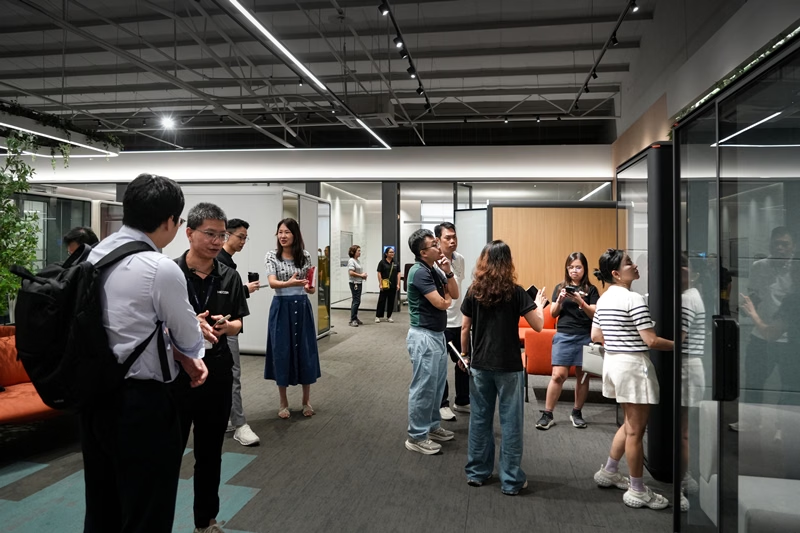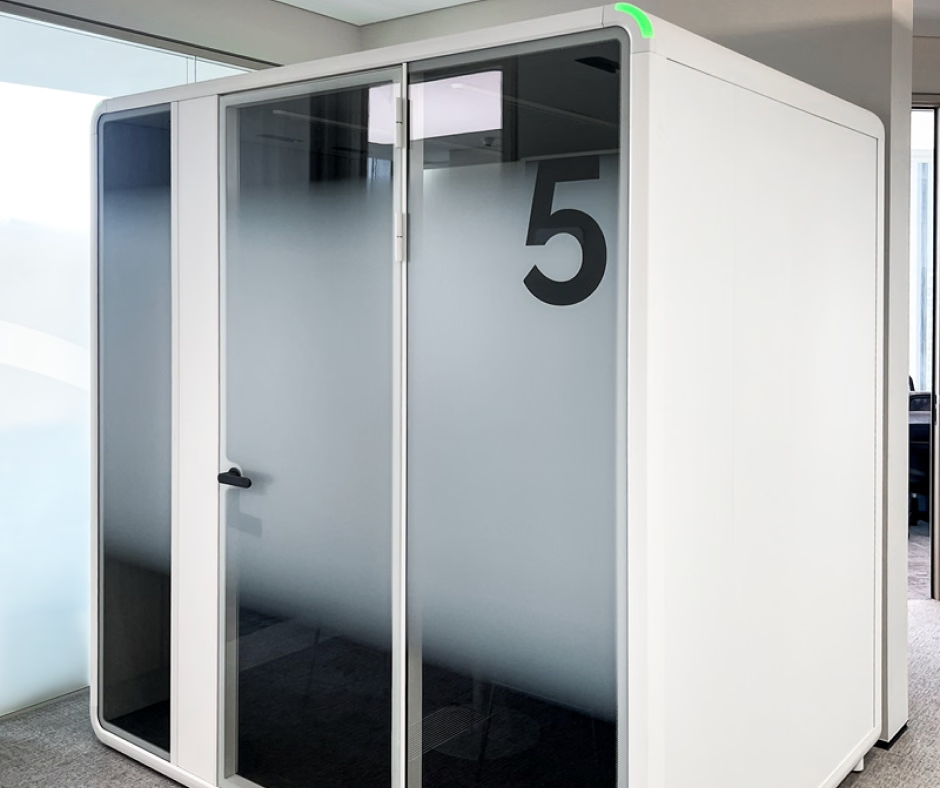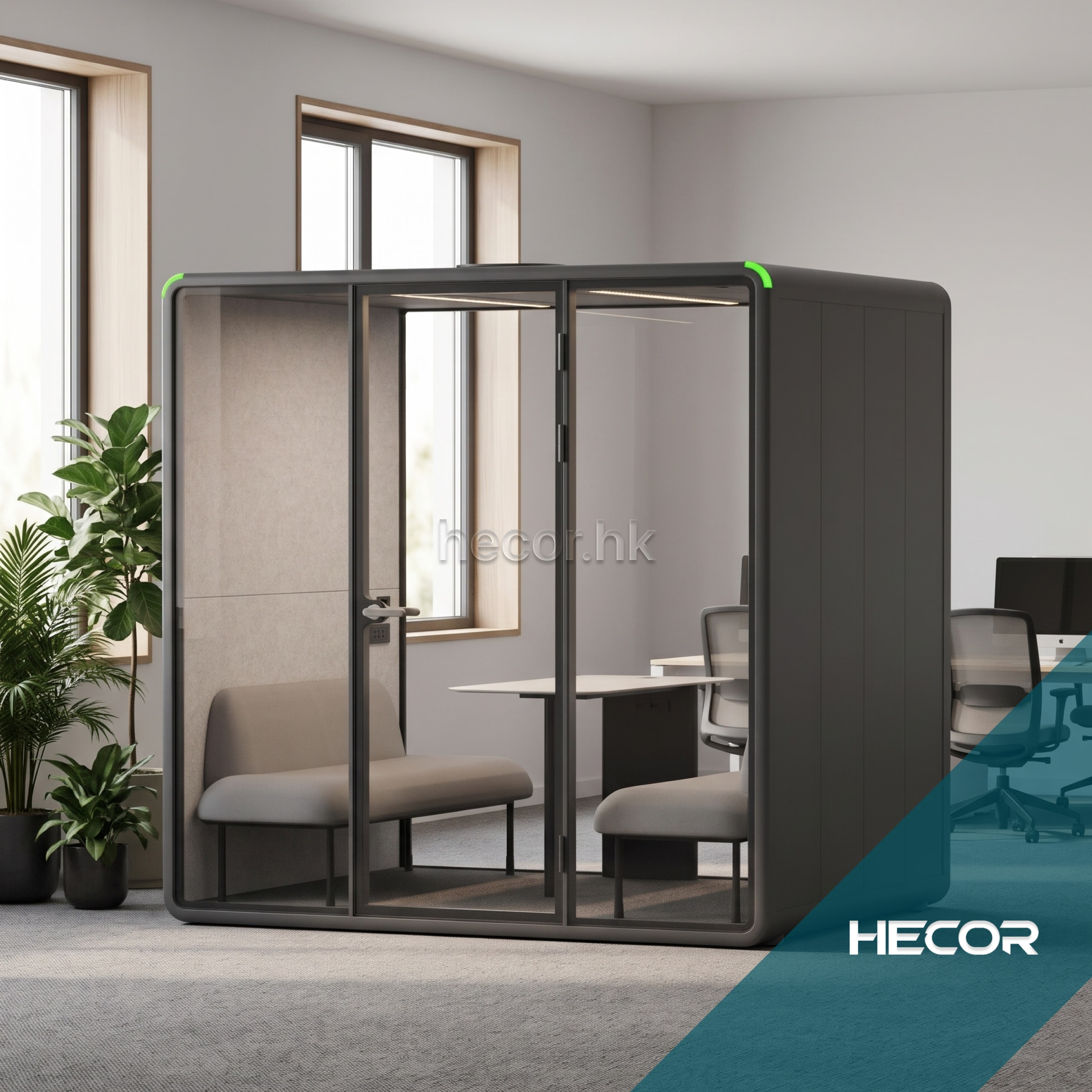
Open-plan offices boost collaboration, but they also create constant noise, privacy issues, and difficulty focusing. Private Pods (also called office pods or acoustic booths) have become a practical solution—modular, movable spaces that deliver quiet without major renovations. Choosing the right one, however, requires more than looking at appearance. Here are four fundamental criteria to guide your decision.
1. Product Size: Match Capacity and Footprint to Real Needs
Size is the starting point. A silent pod that is too small feels cramped; one that is too large wastes valuable floor space and budget.
Consider both exterior dimensions (how much space it occupies) and interior dimensions (usable room for people, desks, and chairs). Typical options range from compact single-person phone booths ideal for calls and focused work, to 1–2 person work pods for collaboration, and larger 4- or 6-person meeting pods for team discussions.
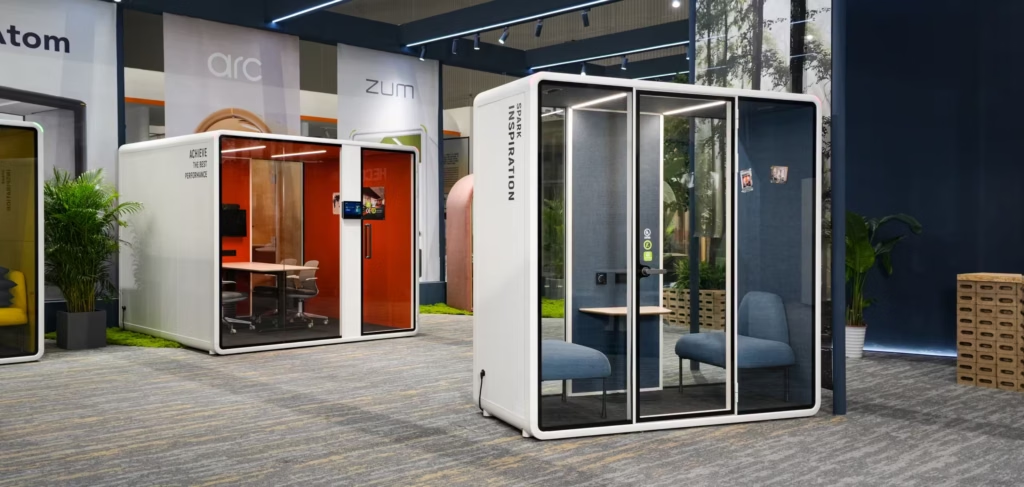
HECOR offers a clear range across its ZUM, ARC, ATOM, and Deluxe series. Single-person models typically have exterior footprints around 1.0–1.1 m in depth and width, while larger meeting pods expand accordingly. Modular design and relatively compact footprints allow them to fit into existing offices without structural changes. Installation is usually straightforward—often completed in about two hours—making it easy to place pods where they are most needed and even relocate them later.
When evaluating size, measure your available space, account for door swing and circulation, and confirm the capacity matches actual usage (solo calls vs. small meetings).
2. Sound Insulation Effect: Demand Verified Acoustic Performance
The core purpose of a acoustic pod is noise reduction. Marketing claims alone are not enough; look for independent testing against recognized standards.
A reduction of around 30 dB (speech level reduction) is widely considered effective for turning typical office noise into a quiet, library-like environment. This level of performance usually comes from multi-layer construction: laminated acoustic glass, dense sound-absorbing panels, sealed joints, and carefully designed ventilation that does not compromise the barrier.
HECOR pods are tested to ISO 23351-1/2021 and deliver speech level reduction of more than 29–30 dB. The design combines double-layer laminated glass, multi-layer acoustic panels (often around 45 mm thick in key areas), and labyrinth-style ventilation systems that maintain airflow while limiting sound leakage. The result is a practical, measurable quiet zone suitable for calls, video meetings, and deep work—even in busy open offices.
Always ask for test reports and understand the measurement method rather than relying only on “up to X dB” statements.
3. Customer Trust: Look for Real-World Adoption and Proven Track Record
Trust comes from demonstrated use by organizations that have high standards for workplace quality, safety, and reliability. Long-term operation in real offices, repeat orders, and references from known companies reduce risk.
HECOR has supplied acoustic pods to major organizations including PWC,Google,Tencent, ByteDance (TikTok), Alibaba, Huawei, McDonald’s, Citibank, Gree, Midea, and logistics companies such as SF Express. With roots in office partitions dating back to around 2012 and dedicated pod production since 2017, the company has accumulated experience across offices, coworking spaces, and institutional settings. Large-scale deployments and ongoing partnerships indicate that the products perform consistently in daily use.
When assessing trust, review case studies, project references, after-sales support, and warranty terms. A manufacturer with a history of serving demanding clients is generally more reliable than one relying only on laboratory claims.
4. Certifications: Verify Safety, Health, and Environmental Standards
Certifications provide independent verification of critical aspects beyond basic function—especially indoor air quality, material safety, and electrical/structural compliance.
Key certifications relevant to office pod include:
- GREENGUARD Gold (UL) for low chemical emissions and healthier indoor air
- UL 962 for safety of electrical and structural elements
- Acoustic testing to ISO 23351-1
- Additional regional or product-specific marks such as CE, PSE (Japan), or SGS carbon-footprint verification
HECOR was the first company in China to obtain GREENGUARD Gold certification for its acoustic pods. The pods also comply with UL 962 safety standards and meet ISO acoustic performance requirements. Materials are selected for low VOC emissions, supporting healthier air quality during long periods of use. Additional certifications such as PSE further support deployment in markets with strict requirements.
These credentials matter because users often spend hours inside the cabin. Verified low-emission materials and safety compliance reduce health and regulatory concerns.
Making the Right Choice
The best office pod balances the four criteria: a size that fits your space and usage, independently verified sound insulation of approximately 30 dB, a manufacturer with proven customer trust, and relevant certifications for health and safety.
HECOR’s range of modular office pods addresses these points with practical sizes, ISO-tested acoustic performance exceeding 29–30 dB, adoption by major organizations, and first-in-China GREENGUARD Gold status alongside UL 962 and other certifications. For organizations seeking flexible, high-quality quiet spaces without permanent construction, evaluating options against these four criteria provides a clear, evidence-based framework.
Visit hecor.hk for detailed specifications, series options, and project references.